The give-and-take of creative critique

diver is midair, headed for lake water with companions in background

Asking for others’ critique could just be the thing that sets your work free. (Good thing, it goes both ways.)

I used to hate having my work critiqued. It made me itchy.

Over the years, I’ve learned to love it. In fact, I’m usually much more proud of my work as a result of others’ critique.

A little backstory: I lost my job in 2012 and it took a year to get back into the workplace. Yet another year later, I was job hunting again. Since the freelance and consulting work found me, I decided it was probably what I should be doing.

But one thing I’ve missed about the workplace is being with people. I’m an ENTP (read: extrovert who likes to start stuff), I love being, working with and learning from others. That includes critique of my work.

Because un-critiqued work is almost never the best possible work.

In my view, it’s work that no one really cares about. I get it that people are busy and may not have extra bandwidth, but getting someone’s input on your work is critical, not only to quality but to buy-in, especially if your work proposes changes that affect others. Socializing ideas is always easier when others have seen the preliminary work and have an opportunity to contribute their thoughts.

The fear of feedback

It’s understandable to fear critique like the plague, since it can feel like a personal jab to something that’s a part of you…like kicking your dog or something. Consider instead that you can get a lot of satisfaction knowing the core idea is yours. Others will just help you polish it up a bit.

In the end, critique is about collaboration. If you’re a believer that “together we’re better,” it’s a lot easier to swallow.

When giving or receiving critique on creative work, try the following:

Take a dispassionate approach to the critique.

  • Don’t take things personally.
  • Take your emotions out of the equation and consider, “If this were someone else’s work, might I have asked similar questions?”
  • Consider the role – rather than the personality – behind the critic’s feedback. What bases or interests are they trying to cover or represent? Does it help more to include it than it would hurt to leave it out?

Take every piece of feedback and put it into a checklist.

  • This isn’t so much so that every single suggested change is made, but so you can see the range and scope of changes and how they can impact your end product. Maybe there’s a pattern in that feedback that begs your attention.
  • Do the suggested changes make sense individually? Do they stand on their own?
  • More importantly, would the feedback make sense if it were all applied?

Consider the end user.

  • Will they understand the work as is? What questions are they likely to have, with or without the applied feedback?
  • Does the input provide more answers than questions? If No, there’s more work to do.

Give others the benefit of the doubt.

  • It’s true, there’s a kook in nearly every bunch who wants to throw you under the bus. Ignore them. But don’t necessarily toss out their feedback. If you’re on the same page regarding end-product quality, it’s worth considering others’ insights before assuming they’d just rather see us burn in hell.

Ultimately, it’s your work and, at the end of the day, the feedback is yours to take or leave.

But there’s one more question that if you ask nothing else, you must ask, it’s this:

Will this input make the end product better? This is the most liberating question of all, because it forces us to let go of “ownership,” releasing our work into a larger community.

  • No? Nix it.
  • If Yes, the rest should be a piece of cake.

Now, go make some great stuff!

The truth of the matter

I’m coming up on 30 days solid of blogging – shipping each and every day.

Granted, it hasn’t felt like it was great shipping, but it was keeping a commitment to just do it. For that, I am very happy. I’ve built both a new habit and a new discipline, and I couldn’t be happier abot it.

What I didn’t realize is how this process will play out in stages of maturity.

While I’m getting over the fear now of “just doing it,” I find that, in this process, it is still hard for me to open up. It’s still hard to crack the nut of what hurts and what really makes me vulnerable.

So this will be my one of my new goals for Phase 2 of my personal Your Turn Challenge:

My happy, happy Valentine’s heart

heartWhat a wonderful weekend.

It wasn’t eventful, but it was full.

It wasn’t fancy, but it was lovely.

It wasn’t full of fanfare, but it was full of joy.

It wasn’t hysterical, but it was funny.

It wasn’t anything out of the ordinary, and that’s what made it special.

A new book, a new secret decoder pen

Today felt more like Christmas than Valentine’s Day.

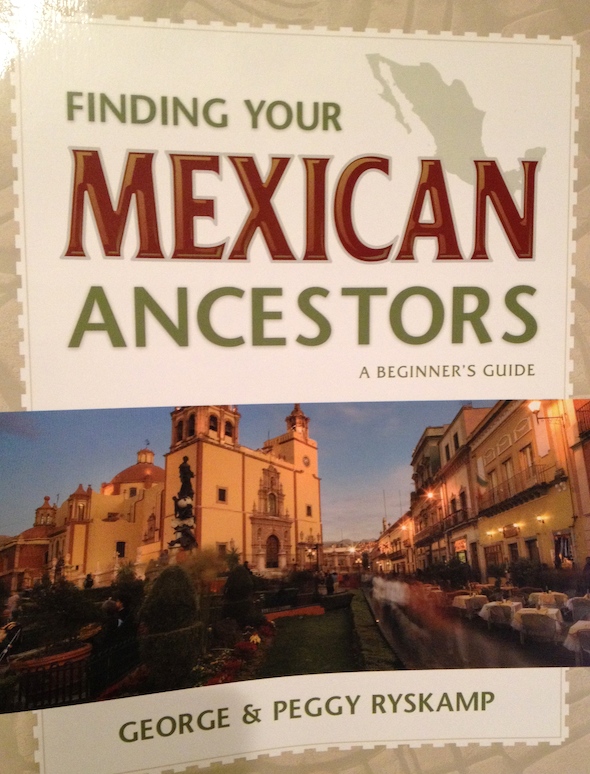
finding-your-mexican-ancestorsMy mailman brought me a reference book I’d ordered to help with my family history research. Great timing, since Finding Your Mexican Ancestors is like my secret decoder pen for unlocking key records about when my grandfather and grandmother came to the U.S.

Along with increasingly available online resources, this book (and anything by Ryskamp) offers so much context, I’ll now have a better idea of why, how and where I’ll find records to fill in some of our gaps.

I can’t help but be more amazed every time I turn around to learn how genealogy has evolved technologically since I last worked on my family’s history. But sometimes analog is still the best way to go to find answers to lingering questions.

In any case, it makes for a great Christmas Valentine’s Day present.

I don’t know what I think

flanery-dont-know-what-i-think

This is true for me more often than not. HT McGillistrations.

What’s on your bucket list?

whats-on-your-bucket-listSo I’m curious: What’s on your bucket list?

A couple of years ago, I decided I’d make up for lost time and rekindle my love for music. I played piano and violin growing up and, conveniently for me, when we moved to South Texas from the Midwest, I “forgot” to enroll in orchestra classes.

Amidst the confusion and transition of the move, my mom probably forgot about it. And then she didn’t. But by then it was a year or two too late, and I only played on occasion at church or for other gatherings.

Ever since I started playing violin in the 4th grade, all I really wanted was to play the cello. Trouble was, it was a lot bigger than I was, and I had a mile to walk to school, each way. So there went that.

I’ve grown a couple of inches taller since then, and I’m feeling pretty good about returning to playing a stringed instrument again. Only this time, it’s going to be a lot bigger.

What Poor Mexican Gone really means

Weekends are for fact-checking. In fact, I’m thinking of using them to write more about my family’s history, since I have more time on weekends to do research.

I’m more fascinated every day by how the world, as it evolved, was a macro image of things happening in my own family and in the fast-changing Mexican and Mexican-American cultures.

For now, I got one fact wrong – an important one. And I love the correction!

Today I learned that the “poor mexican gone” saying didn’t come from my my mom’s mom, although she was known for making up some pretty funny ones.

It turns out this phrasing came from my paternal grandfather – my dad’s dad.

So what started as this:

Cuando hitty con un cartucho
No come back
Cuando de repente pún
Poor Mexican gone

Actually meant this:

When you pull the trigger [on the gun],
The bullet doesn’t come back
When it hits the Mexican,
He doesn’t come back [either]

I love that, as facts come together with more clarity, the surprises keep coming, rearranging the pieces of this puzzle.

As with many things in life, sometimes it’s just not as important to see what it all looks like in the end, when the journey alone has so much to teach us. I’m grateful for the rich lessons along the way.

Do you and your team complement each other?

I confess, I’m an assessment freak.

I like to know “how I’m doing” and where I stand – sometimes on my own, other times as I compare to others. I just like to learn more about how I’m wired so I can be better in whatever I do.

Also of interest to me is finding out what makes other people tick and how they’re wired. Most of the time, I like to sit and listen to them and hear them talk from the heart. You learn a lot when you let other people tell their story.

But often you just don’t have that kind of time.

Take job interviews, for example. If you’re lucky, you get maybe an hour to get to learn first-hand whether a candidate is compatible with you and/or your team. That’s not a lot of time, especially when you’re covering technical skills and other competencies.

I remember trying to get a read on potential hires during interviews. I’d ask a few Either/Or questions to candidates to get an idea of how they operated and, consequentially, how we might work together. Not that everything about us is either/or, but we typically know what we like or don’t like.

That’s all I wanted to know. So my questions went something like this:

Which is your preference:

  • Fast-paced or slow?
  • Details or big picture?
  • Dreamer or closer?
  • Starting or finishing?

If the candidate and I were wired similarly (fast, big-picture, dreamer, starter), chances were good the combination wouldn’t work as well as it could. We might get along socially, but why have two starters when you could start well and finish well – with a really strong closer? So I typically went for my opposite, or at least more of a complement.

For what it’s worth: In my experience, visionaries or big-picture folks can report to each other pretty peacefully, as can details people. And details people seem to work well when reporting to a big-picture person. Just not vice-versa, for some reason.

What do you think? Have you experienced the same?

One theory I have is that the latter combo can be less-than-ideal due to the vastly different languages visionaries and details people speak. It’s like apples and oranges.

Of course, if you like apples and oranges, I suppose you can always make smoothies.

Some days (or nights)…

It’s just better to have a glass of wine with someone you love and get offline. Tonight is that night.

Wanna be startin’ something?

I’m entrepreneurial by nature and by birth. From a legacy in my family of “starters”  — from grocers to gas station owners, seamstresses, ministers to musicians and marketers, bootleggers, accountants to attorneys and retailers — there’s a lot of startup in my blood.

metate1

Making meal for corn tortillas went from 16th-century low-tech…

The best part: my grandmother owned a molino de nixtamal, a corn mill for grinding maize to resell to markets that sold tortillas. I just learned that having the kind of manufacturing equipment required to run this operation was pretty cutting-edge for the early 20th century – anywhere in the world.*

Ha. My grandma was high-tech! Sigh. One more story to run down. But back to business.

molino

…to high-tech, with marked advances in the early 20th century.

Working for the man
While I’ve mostly worked for “the man” (The Man, actually) much of my career, I’ve had to find ways to feed my need to build new things, wherever I was. I’ve been fortunate to be in rapid-growth environments and fill in critical gaps due to the growth.

But here’s what I learned: If you have an entrepreneurial spirit and work in a larger company or business that’s not yours (yet), learn what you can where you are. Make the way you’re wired work for you and your employer. And then take it up a notch.

Here are a few ideas on how to “be startin’ something” right where you are:

  • Find an important problem that needs solving and perhaps that no one has “discovered” yet. If you’re one who spots trends or opportunities early, this is where you use it. Get some traction by taking on a project you know has a start and a finish – something that’s measurable, with tangible output.
    One project I worked on a number of years ago capitalized on what was then “new” RSS technology – the ability to syndicate content. We needed to distribute globally gathered story content from a team of field reporters — a good solution for our customers, who were also globally distributed. RSS was a seemingly small solution, but it had a big impact on productivity and opened up great opportunities for me to contribute more.
  • If you are ready for a bigger challenge, identify an initiative that meets an ongoing business need. How about that new CRM idea that’s been kicked about for so long? Got a knack for tech? Maybe this is your thing to drive for the business side of the house.
  • Heck, it could be something that has been broken for so long, everyone has just accepted it and learned to “work around” the “broken” state and call it good. Fix that. Think big.
  • Next step: Mention the idea to your supervisor and measure the warmth of her reception. If it feels good, come back with a more thought-out solution and a high-level plan. You never know – you just might be onto something.

It is possible to carve a niche for yourself by spotting opportunities and showing you’re self-starter who can help advance the business and your team’s credibility while growing your personal toolkit. My grandmother did it. She spotted an emerging opportunity and seized it – by making tortillas highly reproducible.

You can do the same in your space.

The fact is, you know your work and understand the types of problems that need solving or are trending. Chances are also good you’re pretty familiar with what good solutions look like, now and in the future. So find them. Offer them.

If you don’t do it, who knows when anyone else will get around to it?

p.s. I’d drafted this post (the one that blew up) before coming across this one from Seth today. Love his wisdom – don’t miss it!

* Source: Goods, Power, History: Latin America’s Material Culture, Arnold J. Bauer, p. 190.