So…Forget the Alamo?

For the first time in 20 years, I’m on the hunt for a long lost ancestor.

Last time I looked for this guy, I discovered his parents, siblings, children. Yet there was no sign he’d been born into the family that raised him.

That’s how my research stayed for a long time.

Yesterday, I found his biological parents – definitely different than the folks who raised him. And quite possibly a different line than I was hoping for.

Image capturing cover page of Arteaga, Coahuila parish records 1820-1861

It’s time to go through Mexican parish records again so we can connect family dots and learn more about a pivotal ancestor.

That missing piece
Funny, how we always look for that missing piece – the missing relative, the runaway cat, the lost puppy  – and we’re not satisfied until we know their status. Happy endings preferred, of course.

I wonder whether we’re just trying to plug holes to cover up cracks in our lives … or if what we’re really after is wholeness or belonging, regardless of the amount of ugly it takes to get there.

For this ancestor, I always wanted to know whether he was born to different parents than those he grew up with. Now I have my answer, and I still want more. I want the whole story.

Perhaps his mom died during childbirth, or maybe he’s the stepchild, “the milkman’s son,” as it were.  Who cares. He’s my relative, and now I feel responsible to bring his story to life.

Oh – it looks like our shot at being related to Spanish/Mexican nobility is going downhill…fast.

WFH: How’s it going for ya?

* WFH – Working from home

DeathtoStock_Creative Community3-xsm

Death to Stock Photo image

A few years ago, I wanted so badly to trade places with my consultant husband. I worked for ‘the man’ and had done so my entire career.

But I didn’t get to pick up at the drop of a hat, go for a bike ride or on a fishing trip (not that I would) – or even ride some powder in the mountains after fresh snow. I was a mere mortal.

If I’m honest, I probably held a grudge for a good 10 years. Until the tables turned.

Now, I’m wearing his shoes and well, there’s a lot to learn — mostly about myself.

In fact, it wasn’t until just recently I realized how much I need to be around people as part of my work. I’m a flaming extrovert, so while I adore my cat, being alone with him all day – well, that just won’t work.

Trust experienced telecommuters
I’m thinking Someone is saying something to me. Between this blog from Tara Mohr:

One of the things that made difference – that made the exciting parts come to the fore, and the harder parts fade to the background, was taking care of myself in the little ways. I’ve been spending so much more time with people I love, and taking the time to get out and do my work in beautiful cafes – doing the little things that nurture me.

..and this straightforward listen-to-your-rhythms piece, I need to make some changes.

Is the grass really greener?
In a world driven by happy-path stories and personas, it’s easy to think everyone else is living the dream. (Pssst…they’re probably thinking the same of you.) But sometimes what we have is exactly what we need during that moment … just with a slight twist.

My “twist” will be working away from home more – in cafés beautiful or otherwise – so I can be around people more. What will yours be?

When your family’s roots start digging in

Well, that was a surprise.

So I went online tonight on a whim to see what all has happened in the world of online genealogy since I took my last serious look (several years ago).

If you are impartial to having your ancestors “baptized” posthumously by Mormon missionaries, this one’s for you.

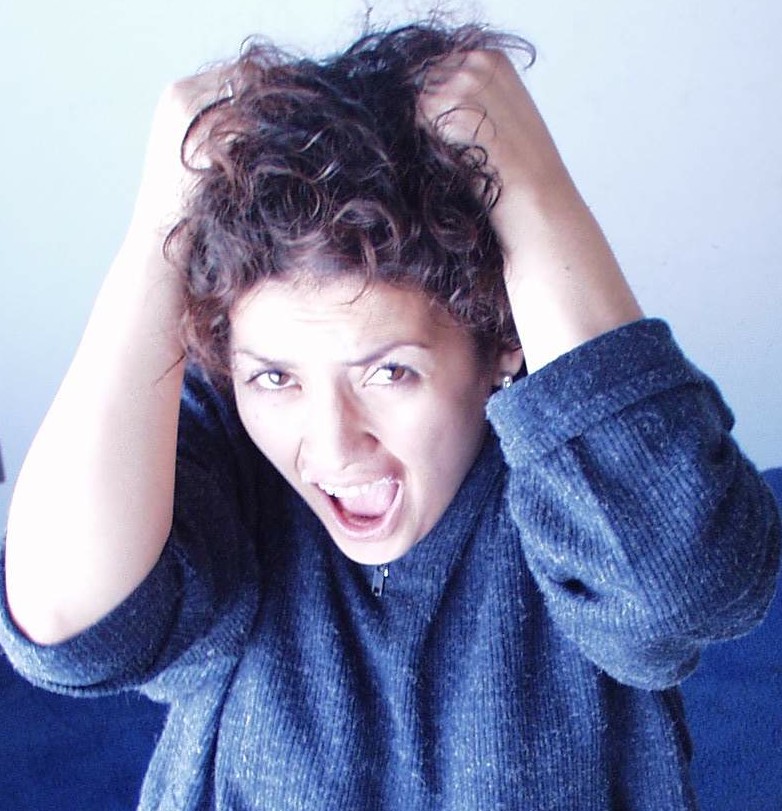
pullinghair-smWhat had taken me hours upon hours – no, months upon months – to compile in family history was, quite literally, fairly easy tonight in the space of an hour or two.

I’m a huge technology advocate and often an early adopter, so I appreciate the leapfrogging advances that come every few months in the world of tech. To see it some 20 years later, though – that was on a scale I wasn’t expecting. I shouldn’t be surprised, but it is simply amazing how easy this has gotten.

I still have a lot of validating to do, but Lord knows I did that homework way back when. Now I am plugging in facts and literally connecting people-dots.

The coolest part: It looks like I’m getting closer to validating that our family were among the founding fathers of the San Antonio de Bexar – San Antonio, Texas.

I really do think my head might pop.

Transition

southern-shores

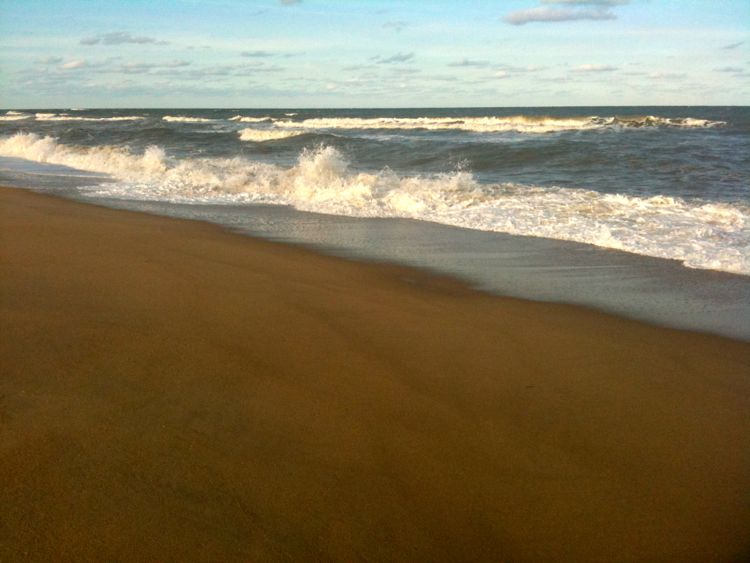
“I learned about waves when I was little, swimming in Lake Michigan in navy blue water under a clear sky, and the most important thing I learned was this: if you try to stand and face the wave, it will smash you to bits, but if you trust the water and let it carry you, there’s nothing sweeter.”
—Shauna Niequist, Bittersweet

As a kid who grew up near the ocean, I can totally vouch for this. As a landlocked adult, it’s even more true now.

Priming the family story pump

When I was starting my family research paper for my Mexican American history class so many years ago, my professor told us to start with what we know — to start with the living.

Continuing to learn and tell my family’s history means a lot to me. I’m a dots connector, so when I see the past and present woven together through story, it puts me in awe of time, of history, of my own life and how I got here.

In fact it fills me with, I don’t know, a confidence in knowing and understanding a little more about who I am. It helps me feel like I belong. For someone who grew up as a minority in most situations, that is saying a lot.

And I can only imagine what it could mean to more of my loved ones.

I feel a family history project coming on
So I’m feeling another family history “project” coming on, but this one’s gonna need some help from my familia. They just don’t know it yet.

It’s time again to follow Dr. Zamora’s advice and capitalize on the time we have with those of us who are still here. I mean, each of us can come up with at least one story or memory to share, right?

There’s always a party pooper, but they can stay home from the party*. I just think it would be great to honor senior family members, as well as those who have gone ahead of us.

I can’t wait to see how this turns out.

* You’ll learn soon enough that I have a special fondness for música tropical, namely salsa. It’s not uncommon in some songs to label party-poopers — the ones who never enter the dance floor — as los aburridos (the bored ones). So sad.

The morning after

So it’s the morning after (OK, the day after…my morning got away) completing #YourTurnChallenge.

I’m kind of numb, kind of relieved, pretty tired but overall really energized by the experience.

I’ve tried something similar before, and I mentioned NaNoWriMo in a separate post. That’s about cranking out the crap that wants to grow up to be a novel. And I do mean crap. A minimum of 1500 words, every day, for 30 days. Doesn’t have to be good. Just needs to be written.

Wasn’t quite for me, although it did generate the foundation for documenting my family’s history through story. That has been very rewarding. But it mostly stayed in my journal, until now. So yay for that.

Surprisingly, I came closer to hitting NaNoWriMo’s word count during YTC than I could have imagined. Today, I’m keeping it short – mostly because this time feels sacred somehow.

I’m still processing what all of it means in the grand scheme and how I can apply it more professionally, as well as personally.

What I’m really getting my head around is that finding your voice just requires using it. That’s it. Just ship.

Build it so they will come
I have a post coming soon for the professional comms audience: “Build It So They Will Come.” It’s still about the same stuff – using what you know to help others build their knowledge base. We just need to remember, they might not learn it in a way that resonates with them unless we share.

Here’s to the wheels being greased and turning again. Clink! Clink!

Pan Am: Talk about shipping – or not

Welcome to my #Day4 post of #YourTurnChallenge with Seth Godin.

I was just hours from being shipped off to NYC as my base. Undoubtedly, I’d be flying international flights, primarily. Most of us newbies would.

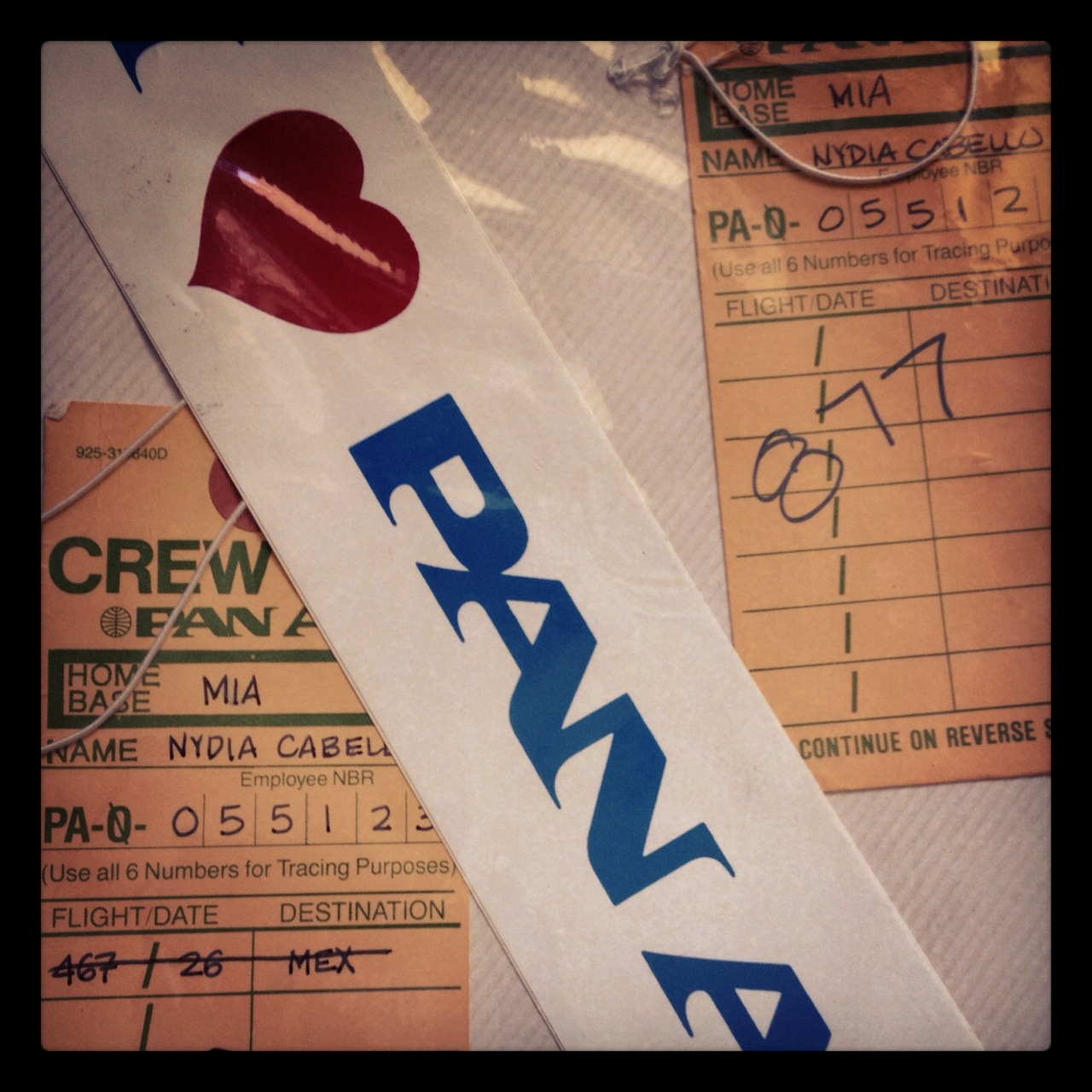
We were Pan Am Flight Attendant Class #21, and we’d just completed six weeks of “Barbie Doll Boot Camp” (well, that’s what we called it) in Miami, living out of suitcases the whole time  — you know, to get the hang of it.

We trained together, ate together, exercised together and qualified for our new posts together — including that huge, inflatable emergency slide.

IMG_4554The Q Flight
My qualification flight to Mexico City took place a few days before I would head to NYC. All I can remember was working First Class on the outbound flight – a large but mostly empty cabin upfront. Incredibly uneventful.

And then there was the return flight, which I nearly missed. (Now, after having flown to Mexico City for work a few times since then, I completely understand why.)

I worked Economy on the way back — a distinct difference from the trip to Mexico’s capital. We had about 400 passengers — all hungry, probably except for the guy whose Kosher meal I forgot. Another passenger was so thirsty, I poured coffee all over his lap.

Back to the night of graduation. My mom had flown in to see me off, I had done really well in training and had been promised many opportunities, and it was my turn to receive my certificate.

I showed up “dead-heading” – in street clothes, rather than uniform. And I bailed. I withdrew from employment with one of the “sexiest” airlines around (no pun intended, but whatever).

And it had nothing to do with the job.

Over the last six weeks, I’d been running from grief. My father had died of lymphoma nine months earlier, and I now realized I hadn’t really grieved his passing or how much I missed him.  Or how much my mom and I needed each other.

I’d been going too fast, with multiple attempts to return to college, a big breakup and now Pan Am.

Pan Am was fun, but not all that fun when my mind was on family. It was time to go home.

It’s not like I have never “what if’d” that decision, but the fantasy can’t beat my reality. My career took me around the world in a whole other context, for which I will be forever grateful and changed.

And you know what? I finally learned how to live out of a suitcase.

I’m a product of Head Start

Welcome to my #Day4 post for #YourTurnChallenge.

I am a product of my parents’ generation, but I’m also a product of a government program that dates back to JFK’s successor, President Lyndon B. Johnson — LBJ.

It will soon be my privilege to work on a project involving this program that helped shape me.

Memories of Head Start
My memories of Head Start, an early childhood development program for low-income families, are mostly about my mom and the First Methodist Church in South Bend, In. It’s a Montessori school now. Head start provides disadvantaged families with essentials for children ages 3-5  and a place to develop socially, socially and cognitively.

Partnering with Parents
Not sure I knew this at the time, but I think Mom was a teacher’s aid. Or maybe parents had to volunteer time if their kids were enrolled.

Anyway, she was there a lot. To my surprise, I may have been a picky eater during my early years, because I can remember at lunch or snack time, my mom trying to make eating fun (sound familiar to you parents out there?):

“Mama Mia, Papa Pia – eat your lunch!”
— My mom

I fell for it – every time. Maybe I wasn’t a picky eater…

Then there was nap time.

My spot, just under the window near the middle of the room, was where I would lay my head for, oh, maybe 20 minutes. (Probably while my mom and the teacher took some aspirin and naps of their own.)

The only thing between me and that cold, asbestos-laden, marbly floor tile was a bath-towel-sized swath of white seersucker with tiny red hearts and a white ribbon border. It was like sleeping on Saran Wrap.

Still, I loved that blanket. My grandma had made it just for me.

my-fourth-birthday

My 4th birthday. Mom was proud; my brother just wanted cake.

In child development, little things go a long way
It may not seem like much, but Head Start gave my family a much-needed boost while preparing me for school and giving me a love for learning. After all, we were a family of six on a minister’s income, which wasn’t much.

I’m not a child development expert, but for nearly 10 years I worked for a child development organization and communicated its mission and impact to donors.

For years, I traveled extensively to gather stories or coach others on it, and I witnessed first-hand how important it is to give children a healthy, strong start to life. It is often the difference between living a future of hardship and poverty – or not.

Like many programs from the Great Society era, Head Start is due for an update. It will be exciting to see how it evolves to serve the modern family and continue giving kids a strong start to a healthy and productive life.

Why the Surprise Journal Is a Great Nonprofit Storytelling Tool

Welcome to my #3 post for the #YourTurnChallenge – the best kick in the pants ever.

I’ve spent a good chunk of my career in nonprofit communications — building, scaling and realigning content programs for rapid growth.  Later in this blog, I hope to outline some ways to build and improve comms for nonprofits large and small, taking a deeper look on occasion at Hispanic philanthropy and causes.

In this post, I want to focus on a new journaling technique called the Surprise Journal (great Pinterest post and the original Fast Company article) and how this approach is the perfect tool for nonprofit storytelling.

Surprise Journal basics

The point of the Surprise Journal is to write down and record the things that, well, surprise you – and then examine the reason for it. It gets to the heart of assumptions and expectations, helping us reset our thinking accordingly.

It works great in brainstorming or team building settings. For Julia Galef, CEO of the Center for Applied Rationality: “I started thinking about surprise as a cue that my expectations were wrong.”

“I started thinking about surprise as a cue that my expectations were wrong.” — Julia Galef, CEO, Center for Applied Rationality

So what does this have to do with nonprofit storytelling?

To show how they make a difference in the world and in people’s lives, nonprofits use storytelling to paint a picture of what that change looks like — with skin on. Ideally, it accompanies good data the story embodies. (That’s a different post.)

If you’re a nonprofit communications person tasked with story gathering and storytelling, sometimes it can be hard to recognize the change when you witness it in gradual steps, day in and day out.

Frankly, it can feel like you have blinders on and are powerless to take them off at will.

However, there’s one set of tools every nonprofit should have: Volunteers, donors, board members – other people who share our passion for the cause but who may not see it every single day .

They notice the differences over a period of time, so let’s ask them. Here’s how.

Observing up-close and personal

At one organization I worked at, our donors and sponsors often visited the international work they supported, and even the children they sponsored through sponsor tours, where sponsors of individual children could meet them and their families in person.

That was a prime opportunity for our field writing team to learn from the first-hand experience of the visitor who didn’t often get to see the work they were enabling us to do and the difference they were making.

Our comms people were nationals, many of whom had grown up facing the circumstances of poverty the children we served dealt with. So, at first, it was hard for them to see how we could tell stories about change and contrast – the proverbial “before and after.” How could they tell a story of how the donor was making a difference? Different from what?

To train on the “surprise” element, we would send a comms person on those trips and ask them to observe visitors, capturing their surprise and what they were reacting to. Maybe they’d never witnessed extreme poverty conditions like lack of sanitation or access to clean water, or child labor.

Visitors’ reactions ranged from gasps, hands over mouths, sudden quiet, silent tears. It ran the gamut. There was no doubting their surprise. In fact, surprise was kind of an understatement for what they were experiencing.

It’s the journalist in me, but that’s where the gold is, folks. In our case, we would ask people, respectfully and via casual conversation, what they were thinking or feeling at that moment.

  • What had caused their reaction?
  • Did they see poverty like this in Australia or the Netherlands or America? If not, what did it look like there? How was it different?
  • What were they comparing their present experience with?

The rule applies here, too

The same works whether your work is across an ocean or in your own back yard.

To know the things you need to tell stories about to help others understand your mission and its impact, capture the reactions of your organization’s stakeholders as they experience your program’s work first-hand. This is especially effective of more newly engaged donors, volunteers or board members who are invested in the cause but still learning about it.

Their reactions will speak volumes while providing plenty of insights and material to work from.

I’d love to know some of your tips on telling a strong story that shows change and how you gather content to produce it. It’s hard, rewarding work whose impact – thankfully – has the power to leave an impression that lasts a lifetime.


Remember the Ánimo – A Recap

Welcome to my #2 post for the #YourTurnChallenge.

Pura Familia (Pure Family)
So it seems like forever since I wrote a term paper on my family’s history. Actually, it seems like another life entirely – my college years.

The paper was a requirement for a history elective I took as a way to weasle out of one of those mass-audience sleeper classes.

My escape route came in the form of Chicano History from 1900 to the Civil Rights Movement. And wow, did it ever open my eyes — just not in the way I’d expected.

The assigned paper required us going back into our family history – to trace our genealogy – for as far back as we could validate. But we had to try to go at least four generations back.

For my family, U.S. Census records would only take me so far. I would be dipping into Catholic parish records from Mexico within about, oh, two generations. Ay, Dios mio.

baptism-records

Note: The background image on my blog is one of those documents. This one is, too.

To be sucked into the past like that was not just full of pressure because I needed the class to graduate. The time investment this paper required was on a level I’d not known before. Little did I know the reward would far outweigh the work.

Pedacitos (Pieces)
The content was a piece of postre. Just interview people and ask them lots of questions. I was a journalism major, so that was easy. Then, compile them into a history of my family.

OK. Done.

But the genealogical research opened up a cultural curiosity in me beyond my wildest dreams. Our family tree that began with the living soon wound its way back to some of the founders of the city of San Antonio, Texas.

Figuring out these disjointed parts wasn’t what took all my time. Actually, what will take all my remaining time on this earth, I think, will be connecting those dots and  adding still more.

Enamorada (In Love)
But for the first time – really – I was getting in touch with my heritage, and I loved it. I still love it and I still romanticize about retirement so I can do genealogical research. All. Day. Long.

Just understanding how my ancestors made a living was illuminating. Entrepreneurs, left and right: grocery store owner, gas station owner, seamstress, musician, bootlegger, molino de nixtamal owner … you name it! And in more recent generations, pastors. The irony. But it takes all types to make up familia, doesn’t it?

It really is all about ánimo (motivation)
So here’s my challenge to you. If you have never looked into your past – into your family’s origins – you should, regardless what your background is.

And if, like many, you are Latino/a but not quite “Latino enough,” definitely dedicate some time to this rich experience. It will make you feel more Latino/a than you knew you could feel, and give you roots you can identify with.

They’re all yours, and no one can take that away.


Note: Does this #YourTurnChallenge week feel a little like NaNoWriMo to anyone else? NaNoWriMo is a growing movement designed to get writers just to dump out crap and crank out the contents of a book – in its most raw form. If you love #YourTurnChallenge, you should try NaNoWriMo sometime.